How to Start a Luxury Villa Rental Business in India – Guide
India’s luxury villa rental market is growing faster than the hotel segment in the weekend and leisure travel category. Platforms like StayVista, Airbnb, and MakeMyTrip now carry thousands of premium villa listings near Mumbai, Goa, Coorg, and Rishikesh. Lonavala villas command ₹18,000+ per night. A well-positioned villa in Karjat with a lagoon view and resort amenities earns ₹30,000 to ₹50,000 per night. For property owners who build and manage correctly, gross annual rental income from a single premium villa can reach ₹20 lakh to ₹55 lakh.
This guide covers every step of starting a luxury villa rental business in India – from choosing the right property to legal compliance, platform listing, pricing, and property management.
Source: How to Start an Airbnb Business in India 2026, Topmate.io (June 2026)
Step 1: Choose the Right Location and Property
The single most important decision is location. Luxury villa rental income is a function of demand density, supply saturation, and natural differentiation – not just property quality.
Demand density means there are enough people searching for stays in your location. Locations within 60 to 120 km of Mumbai – Karjat, Lonavala, Alibaug, Pawna – have proven demand from India’s highest-density urban market.
Supply saturation means avoiding markets where too many similar properties compete for the same bookings. Use Airbnb’s search map to count listings within 2 km of any property you are considering. A market with 50 listings and growing demand is a better opportunity than one with 500 listings and flat demand.
Natural differentiation is the feature that makes your listing stand out: a hillside valley view, a private lagoon, a forest setting, a sea-facing terrace. This is the single biggest driver of per-night pricing. A villa with a lagoon view commands 50 to 100% more per night than an equivalent villa without one.
For the Mumbai market, Karjat is the strongest emerging location. It has growing demand, significantly lower supply density than Lonavala, a natural hillside setting, and the Panvel-Karjat suburban rail giving guests who do not own cars a direct 30-minute connection from Navi Mumbai. For the full Karjat market price breakdown, read Karjat Investment: NA Plots, Land and Prices.
Step 2: Build for Rental Income
A villa built for personal use is comfortable. A villa built for rental income is commercial-grade in six specific ways.
Build facing the best view. Every professional villa photographer shoots from outside looking in – your swimming pool, your valley view, your lagoon proximity are the assets that fill your calendar. A villa oriented away from the best views is harder to photograph and slower to book.
Guests at a luxury villa pay for the outdoor experience. A 12-foot verandah, a well-lit terrace, an outdoor dining area, and a landscaped pool deck matter more to a rental guest than a premium kitchen fit-out.
A private pool is non-negotiable for a luxury villa rental. Guests who pay ₹20,000+ per night expect a pool. Without one, you are competing in the mid-market, not the luxury segment.
3 BHK is the sweet spot for weekend group bookings (4 to 8 guests). Each bedroom should have an attached bathroom. Common for a family or corporate team booking to have privacy requirements that a shared bathroom cannot meet.
Corporate retreat bookings (Monday to Thursday, company offsites) require reliable broadband. A villa on Starlink or dedicated fibre is a differentiated product.
A caretaker on-site handles check-in, pool maintenance, and security. Without one, every guest query routes to you. Budget ₹5 to ₹8 lakh for a caretaker room.
For a full construction cost breakdown by villa size and finish, read Build a Gated Community Villa Near Mumbai.
Step 3: Legal Compliance in India
Airbnb is legal in India. No national legislation bans short-term villa rentals. However, running a luxury villa rental business involves obligations across four layers.
Layer 1: State tourism registration – Some states require hosts to register with the state tourism department. Maharashtra has no mandatory state tourism registration for villa rentals currently, but voluntary MTDC (Maharashtra Tourism Development Corporation) registration adds credibility and access to government-promoted listings.
Layer 2: Local authority compliance – For villas outside municipal corporation limits (Gram Panchayat areas like Karjat), trade license requirements are less strict than urban properties. Confirm with the local Gram Panchayat whether a commercial rental activity requires any specific notification or permit.
Layer 3: GST compliance – If your annual rental receipts exceed ₹20 lakh, GST registration is mandatory. Accommodation services attract 12% GST. However, if you list on Airbnb or MakeMyTrip, the platform collects GST from guests under Section 9(5) of the CGST Act regardless of your annual turnover – meaning many small operators do not need to register independently. If annual receipts are above ₹ 20 lakh, register independently with the GST portal (gst.gov.in).
Layer 4: Income tax – Rental income is taxable under “Income from House Property.” A 30% standard deduction applies to the Net Annual Value. Deduct municipal taxes and home loan interest. File under ITR-1 or ITR-2 annually.
Source: Homestay in India 2026: Legal, Business and Registration Guide, RightToInformation.wiki (July 2026)
Step 4: Furnish and Photograph for Premium Pricing
The gap between a villa that earns ₹10,000 per night and one that earns ₹30,000 per night is almost entirely furnishing quality and photography.
Match your furnishing budget to your market’s expectations. Lonavala and Karjat premium villas command ₹18,000 to ₹50,000 per night because guests expect designer interiors, premium kitchen equipment, smart TVs, quality linen, and outdoor lounge furniture. Budget furnishings in a premium price segment will generate negative reviews that damage your listing permanently.
Hire a professional real estate photographer. Airbnb in 2026 requires GPS-tagged photos taken on the Airbnb app for verification – use the app for mandatory verification shots, then supplement with professional DSLR photography for listing visuals.
Pool from above (drone if possible), verandah facing the view at golden hour, master bedroom with view through the window, outdoor dining setup, and a night shot with pool lighting.
The title should lead with the unique natural differentiator: “Hillside Villa with Sahyadri Valley Views” or “Lagoon-Facing Villa in Karjat’s Only Crystal Lagoon Community” outperforms generic titles every time.
Step 5: Choose Your Platforms
List on at least two platforms to maximise reach and protect against algorithm changes on any single platform.
| Platform | Reach | Best For | Commission |
| Airbnb | Global | International guests, weekend stays | 3% host fee |
| StayVista | India premium | Luxury HNI bookings, curated listing | 20 to 25% |
| MakeMyTrip Villas | India domestic | Domestic families and groups | 15 to 20% |
| Airbnb + direct | Hybrid | Repeat guests, corporate retreats | Direct = zero commission |
StayVista is the strongest platform for luxury villas near Mumbai – it curates high-end inventory and its buyer demographic is the HNI family and corporate offsite segment paying ₹20,000 to ₹80,000 per night. Getting listed requires a property inspection.
Direct bookings through Instagram or a property website reduce commission and build a repeat guest database. For corporate retreat bookings (2 to 4 nights, Monday to Thursday), direct outreach to corporate event managers outperforms platform listings.
Step 6: Pricing Strategy
Price according to three factors: comparable listings in your specific location, your villa’s differentiating features, and seasonal demand.
| Segment | Weekday Rate | Weekend Rate | Peak Season Premium |
| Standard villa (no pool) | ₹6,000 to ₹10,000 | ₹10,000 to ₹18,000 | +20 to 30% |
| Premium villa (pool, view) | ₹12,000 to ₹20,000 | ₹20,000 to ₹35,000 | +30 to 40% |
| Luxury villa (lagoon, clubhouse, resort community) | ₹20,000 to ₹35,000 | ₹35,000 to ₹55,000 | +40 to 50% |
Karjat’s monsoon season (June to September) is a revenue opportunity that most coastal markets cannot replicate. Waterfalls, greenery, and river activities drive strong monsoon bookings – extend your high season by 3 to 4 months compared to an Alibaug beach villa that goes quiet in monsoon.
Step 7: Property Management
For owners who are not based in Karjat, professional property management is not optional – it is the business model.
- What a manager handles: Guest check-in and check-out, pool maintenance, caretaker supervision, linen changeover, cleaning, minor repairs, and emergency responses.
- Management fee: Typically 15 to 20% of rental income. For a villa earning ₹25 lakh annually, that is ₹3.75 to ₹5 lakh in management fees – a reasonable trade for not managing the property remotely.
- What to specify in the management contract: Maintenance standards, response time for guest complaints, pool cleaning schedule, reporting frequency, and the split between platform income and direct booking income.
Revenue Projections: What to Realistically Expect
| Villa Type | Annual Bookings | Average Rate | Gross Revenue |
| Standard 2 BHK, no pool | 30 to 35 weekends | ₹10,000/night | ₹8 to ₹12 lakh |
| Premium 3 BHK, pool, hillside view | 40 to 45 weekends | ₹20,000/night | ₹16 to ₹22 lakh |
| Luxury villa, lagoon community, 4 BHK | 45 to 55 weekends | ₹40,000/night | ₹36 to ₹55 lakh |
Net yield after platform fees (15%), management (18%), and operating costs runs approximately 60 to 70% of gross revenue. On a ₹40 lakh gross, net income runs ₹24 to ₹28 lakh annually.
Why ORA Land BluBay is the Best Starting Point

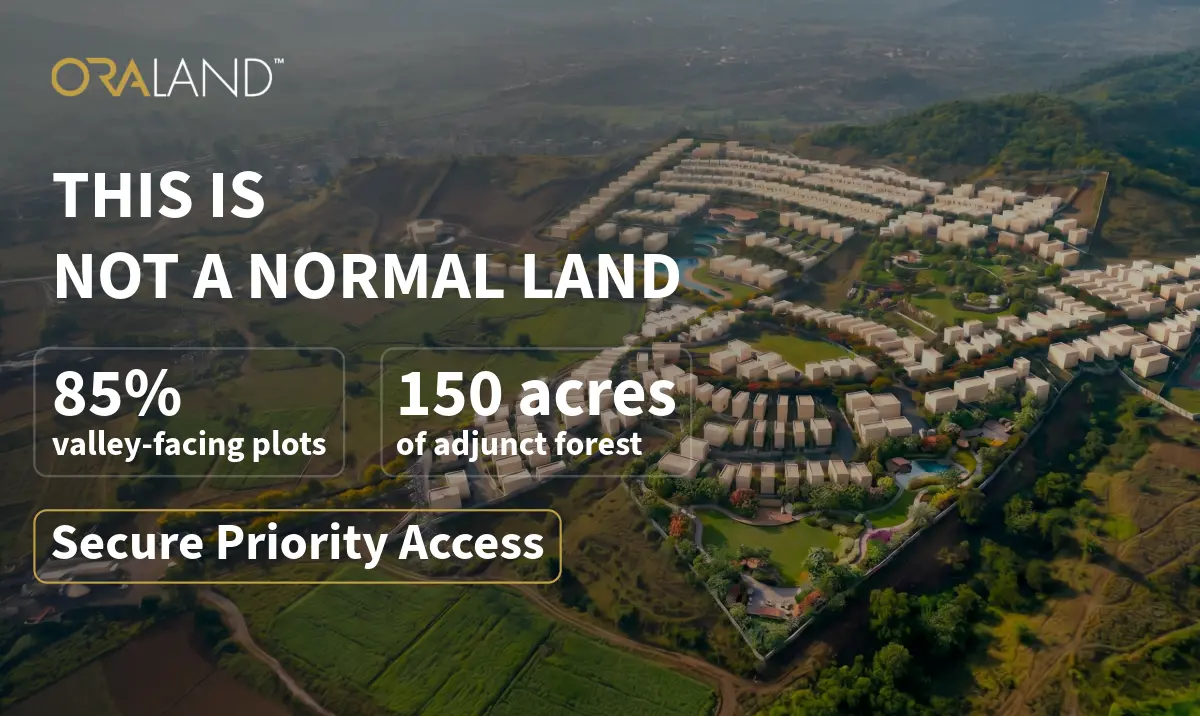
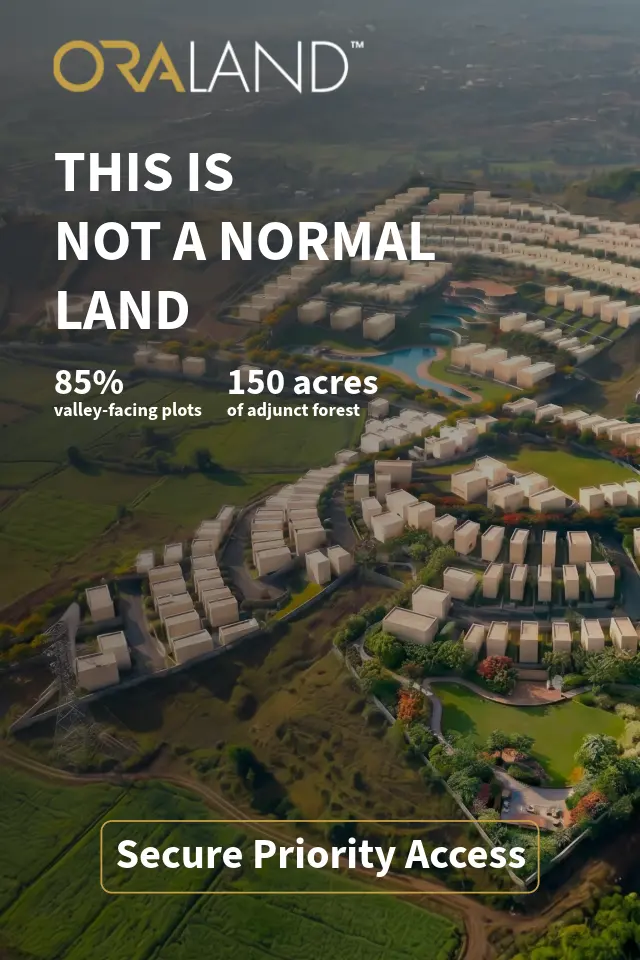
For investors starting a luxury villa rental business near Mumbai, the property choice determines the revenue ceiling. A villa in a basic gated community competes on price. A villa in a community with a 1.5-acre crystal lagoon, a 35,000 sq ft clubhouse, and a Sahyadri hillside setting competes on experience.
ORA Land BluBay in Karjat is the only gated plotted community near Mumbai that delivers the full luxury villa rental infrastructure – lagoon, resort clubhouse, forest adjacency, and station proximity – as shared community assets. Your rental guests’ nightly rate is justified by the entire community experience, not just what is inside your villa boundary. For the full project overview, read Why BluBay by ORA Land Is the Best Investment in Karjat. For the lagoon specifically, read Artificial Lagoon in Karjat.
BluBay plots start from ₹1.10 Crore for approximately 2,500 sq ft. Add ₹1 to ₹1.80 Crore for a premium 3 BHK villa build with pool and furnishing. Total investment: ₹2.10 to ₹2.90 Crore. At ₹36 to ₹55 lakh gross annual revenue, the payback period on construction is 5 to 6 years – before land appreciation is factored in. For land registration costs before you start, read Karjat Land Registration Cost: Complete Breakdown.
For the dedicated second home guide at BluBay, read Build a Second Home in Karjat: BluBay by ORA Land.
Conclusion
Starting a luxury villa rental business in India in 2026 is a viable, well-structured commercial activity. The legal framework is clear. The platforms are established. Demand from Mumbai’s HNI and corporate segments is documented and growing.
The keys: the right location (Karjat leads near Mumbai), the right build (design for photography and guest experience), legal compliance across all four layers, and a community property that justifies premium per-night rates.
ORA Land BluBay gives a luxury villa rental business the starting point it needs – a plot in India’s most in-demand emerging weekend villa market, inside a community whose amenities justify the top of the pricing table.
Explore plots at ORA Land BluBay Karjat.