Karjat vs Alibaug Real Estate: Investment Potential
Both Karjat and Alibaug sit within MMR. Both received MMRDA planning authority on the same date – May 19, 2026. Both are benefiting from the Atal Setu. And both are drawing serious capital from HNIs, NRIs, and institutional investors in 2026.
But they are fundamentally different markets. One is coastal. One is hillside. One has a salt problem. One has a water problem that is being solved by a ₹6,394 Crore dam. One offers beach rentals at premium weekend rates. The other offers year-round hill climate with a 30-minute suburban rail connection to Navi Mumbai.
This is a direct, data-led comparison of Karjat vs Alibaug real estate so you can place your capital in the right market for your goals.
The Core Difference: Hills vs Coast
Every metric in this comparison flows from one geographic fact.
Alibaug is a coastal market. Its value proposition is the Arabian Sea, beach access, and proximity to South Mumbai via the Atal Setu ferry or road route. Land near the coast is permanently scarce. Salt air, monsoon flooding risk, and high humidity define the lifestyle and the maintenance burden.
Karjat is a hillside market. Its value proposition is the Sahyadri foothills, clean air (AQI 54 – rated Good), forested terrain, and proximity to Navi Mumbai via a dedicated suburban rail corridor. Land in the hills is constrained by topography. No infrastructure can manufacture more hillside. But unlike Alibaug’s salt environment, the hill climate is forgiving of structures.
Neither market is better in absolute terms. They serve different buyers with different risk profiles, usage patterns, and financial goals.
Location and Connectivity
| Factor | Alibaug | Karjat |
| Distance from Mumbai | ~95 to 105 km from South Mumbai via Atal Setu and coastal routes | ~60 to 75 km from Navi Mumbai, depending on the route |
| Drive time from South Mumbai | Typically ~1.5 to 2.5 hours depending on traffic, ferry access, and destination within Alibaug | ~1.5 to 2 hours depending on traffic and route |
| Drive time from Navi Mumbai | Generally, ~1 to 2 hours via Atal Setu and coastal roads | ~60 to 90 minutes depending on origin in Navi Mumbai |
| Suburban rail access | No direct Mumbai suburban rail connectivity | Connected via the Central Railway suburban network |
| Additional rail project | No major suburban rail expansion is currently approved specifically for Alibaug | Badlapur to Karjat 3rd and 4th railway lines under development; completion targeted around Dec 2026 |
| Airport proximity | Navi Mumbai International Airport accessible via Atal Setu and future coastal links | Navi Mumbai International Airport is accessible via the Panvel corridor |
| Upcoming road project | Rewas to Karanja Bridge / coastal connector is expected to improve access between Navi Mumbai and Alibaug | JNPA to Chowk Greenfield Highway (29.2 km, ₹4,500.62 crore) |
| Multimodal corridor | Virar to Alibaug Multimodal Corridor (126 km, planned 8 to 14-lane corridor) | Benefits indirectly through MMR logistics and JNPT-linked infrastructure |
Karjat has a meaningful connectivity advantage for Navi Mumbai buyers – the Panvel-Karjat suburban rail makes it the only second home market accessible in under 30 minutes by train from MMR’s eastern urban spine. Alibaug’s advantage is for South Mumbai buyers, where the Atal Setu road connection is the most direct.
The proposed Revas-Karanja Bridge, once complete, will cut Navi Mumbai to Alibaug to approximately 30 minutes – which will significantly close Karjat’s current rail advantage for eastern MMR buyers.
Price Comparison – What You Get
This is where the two markets begin to separate most clearly. While Alibaug commands a premium due to coastal scarcity, luxury demand, and second-home ownership, pricing varies sharply across micro-markets depending on proximity to Mandwa, Awas, Nagaon, Kashid, and major infrastructure corridors.
Alibaug Prices (2026)
| Property Type | Price Range |
| Agricultural land (open market) | ₹80 lakh to ₹2 Crore per acre |
| NA plots (gated, near Kashid/Nagaon) | ₹5 lakh to ₹7 lakh per guntha |
| NA plots (premium coastal, Mandwa/Awas) | ₹15,000 to 25,000+/sq ft |
| Villas (built-up, 2,000 to 3,000 sq ft) | ₹75 lakh to ₹5 Crore |
| Luxury villas (sea-facing, 4,000+ sq ft) | ₹5 Crore to ₹35 Crore+ |
| Average property appreciation (2024) | 13.8% YoY |
| 3-year appreciation (2022 to 2025) | ~30% |
| Liases Foras land value projection | 3x to 3.5x over 5 to 6 years |
Karjat Prices (2026)
| Property Type | Price Range |
| Agricultural land (open market) | ₹1.75 lakh to ₹4 lakh per guntha |
| NA land (open market, highway adjacent) | ₹4 lakh to ₹7 lakh per guntha |
| Karjat NA plots in gated hillside project | ₹5,750 to ₹6,400/sq ft |
| Farmhouses (built-up, 20 to 25 Guntha) | ₹1.30 Crore to ₹2.75 Crore |
| Luxury hillside villas (45+ Guntha) | ₹4.50 Crore to ₹7.75 Crore |
| Premium zone land appreciation | 12 to 20%+ CAGR |
| Panvel YoY (Q1 2026 – gateway zone) | +28.94% |
Pricing remains a major differentiator, with Alibaug’s premium coastal NA land priced at ₹15,000 to ₹25,000+ per sq ft. Conversely, Karjat’s gated NA plots range from ₹5,500 to ₹7,500 per sq ft, offering 40 to 70% better affordability.
A ₹1.10 crore budget in Karjat typically secures a larger, infrastructure-ready NA plot with clear title. In Alibaug, that same investment may only cover a smaller NA plot or agricultural land requiring further approvals.
Infrastructure Investment Behind Each Market
Both markets received MMRDA as their Special Planning Authority on May 19, 2026. That is where the institutional alignment begins.
Alibaug Infrastructure
| Project | Value | Status |
| Atal Setu (Mumbai Trans Harbour Link) | ₹17,843 Crore | Operational (since January 2024) |
| Virar to Alibaug Multimodal Corridor (VAMC) | ~₹81,000 Crore | Planned/phased implementation |
| Revas to Karanja Bridge | Included within the broader regional infrastructure pipeline | Proposed |
| Navi Mumbai International Airport Connectivity | Via Atal Setu and regional road network | Under implementation (NMIA Phase 1 expected to be operational soon) |
| MMRDA as SPA (Alibaug Growth Centre) | Planning authority notification | Notified in May 2026 |
| Planned / Ongoing Infrastructure Pipeline Affecting Alibaug | ₹66,600 Crore+ | As cited in Liases Foras’ market analysis |
Karjat Infrastructure
| Project | Value | Status |
| Panvel-Karjat Suburban Rail | ₹2,782 Crore | Operational 2025 |
| Badlapur-Karjat 3rd + 4th Rail Line | ₹1,324 to ₹1,510 Crore | Under construction, Dec 2026 |
| Atal Setu road access | ₹17,840 Crore | Operational |
| JNPA-Chowk Highway | ₹4,500 Crore | Approved March 2025 |
| Poshir Dam (water supply) | ₹6,394 Crore | Approved May 2025 |
| MMRDA as SPA (28 villages, Karjat) | Planning authority | Notified May 2026 |
| Maharashtra ₹75,000 Crore package (rail) | ₹14,907 Crore (corridor) | Approved Sept 2025 |
Alibaug’s infrastructure pipeline is larger in total value, anchored by the VAMC and Atal Setu. Karjat’s pipeline is more immediate – three projects are already operational or completing within 2026, and the Poshir Dam solves a structural residential infrastructure gap.
The Hidden Cost: Maintenance
This is the factor most buyers underestimate, and it sharply favours Karjat for property owners who plan to visit the property themselves rather than run a professional resort operation.
Alibaug Maintenance Reality
Alibaug’s coastal climate is simultaneously its greatest appeal and its most relentless maintenance challenge. Salt-laden sea air, high monsoon humidity, and intense summer heat create accelerated wear on every surface.
- Concrete, steel, and masonry suffer chloride-induced corrosion
- Anti-corrosion treatments, exterior waterproofing, and re-plastering are required every 2 to 3 years
- Swimming pools in coastal environments require more frequent chemical treatment and liner replacement
- Electrical fittings, ironwork, and fixtures corrode faster near the sea
For a mid-size villa of 3,500 to 5,000 sq ft in Alibaug, total annual maintenance – covering structural upkeep, pool care, landscaping, pest control, and security systems – typically runs ₹4 lakh to ₹10 lakh per year. This is before caretaker salary, utility bills, or any major renovation.
Karjat Maintenance Reality
Hillside properties in Karjat face a different set of challenges – monsoon waterproofing, slope drainage management, and retaining wall maintenance on contoured plots. However, the absence of salt air means:
- Structural concrete and metalwork last significantly longer without anti-corrosion treatment
- External paint cycles extend to 4 to 5 years versus 2 to 3 years in coastal zones
- Electrical and plumbing systems degrade more slowly
Annual maintenance for a comparable 3,500 to 5,000 sq ft hillside farmhouse in Karjat typically runs ₹2 lakh to ₹5 lakh per year – 40 to 50% less than an equivalent Alibaug property.
Over a 10-year hold, the maintenance delta between a ₹3 Crore Alibaug villa and a ₹3 Crore Karjat farmhouse can amount to ₹20 to ₹50 lakh – a number large enough to materially affect real returns.
Rental Yield: Who Earns More
Both markets generate rental income. The character of that income is different.
| Factor | Alibaug | Karjat |
| Rental yield (annual) | ~4 to 6% (seasonal) | Emerging, ~3 to 5% |
| Peak season | Oct to Feb (beach season) | Year-round (weekends) + Monsoon peak |
| Monsoon demand | Low (beach properties) | High (waterfalls, trekking, nature) |
| Tourist footfall trend | 2.2M (2020) to 4.5M (2025) | Growing – eco-tourism hub designated |
| Airbnb market | Established, competitive | Growing, less saturated |
| Platform concentration | High – many listings in the same area | Lower saturation – stand-out properties earn a premium |
Alibaug has a more established rental market with higher volumes. But Karjat’s monsoon advantage is a structural differentiator. While beach properties in Alibaug see rental demand drop sharply from June to September, Karjat’s hillside farmhouses peak during the monsoon – waterfalls, greenery, misty views, and trekking trails drive demand precisely during the months when Alibaug goes quiet.
A well-designed Karjat hillside farmhouse with a forested view can generate consistent weekend rental income for 10 to 11 months of the year. That changes the effective yield calculation significantly.
Appreciation: What the Data Says
Alibaug
Liases Foras, an independent real estate research firm, published its Alibaug market report on May 29, 2026. Key projections: land values expected to appreciate 3x to 3.5x over the next 5 to 6 years. Premium villa prices are projected to rise 2x to 2.5x in the same period. The report attributes this to land scarcity, tourism doubling since 2020, and ₹66,600 crore+ in infrastructure investment.
Karjat
Premium Karjat micro-markets have seen strong appreciation driven by better connectivity, plotted development demand, and infrastructure growth. Panvel and other nearby airport-influenced markets also show robust growth, signaling high investor interest in the Navi Mumbai – Raigad corridor.
Future growth will be fueled by the Atal Setu, Navi Mumbai International Airport, and new rail corridors like Panvel – Karjat and Badlapur – Karjat, alongside MMRDA planning. Unlike the established Alibaug market, Karjat is in an earlier stage, offering a longer growth runway as regional infrastructure and planning evolve.
Which Investment Fits Your Goals?
| Buyer Profile | Right Market |
| South Mumbai HNI, budget ₹3 Crore+ | Alibaug – closer, beach lifestyle, established rental market |
| Navi Mumbai or Central Mumbai buyer | Karjat – under 30 min by rail, lower entry, hillside setting |
| Rental income as primary goal | Alibaug (established) or Karjat monsoon-optimised property |
| Long-term land appreciation, 7 to 10 years | Karjat – higher runway relative to the current price |
| Build a custom farmhouse or villa | Karjat – more NA plot supply, lower construction base |
| Beach lifestyle non-negotiable | Alibaug – no substitute |
| Lower maintenance burden preferred | Karjat – hillside climate is structurally more forgiving |
| NRI buyer wanting lifestyle + connectivity | Both Karjat has a rail edge and Alibaug has a sea edge |
ORA Land T60: Karjat’s Organised Entry Point
For buyers who have weighed this comparison and concluded that Karjat fits their investment profile, ORA Land T60 is the structured entry point in the market.
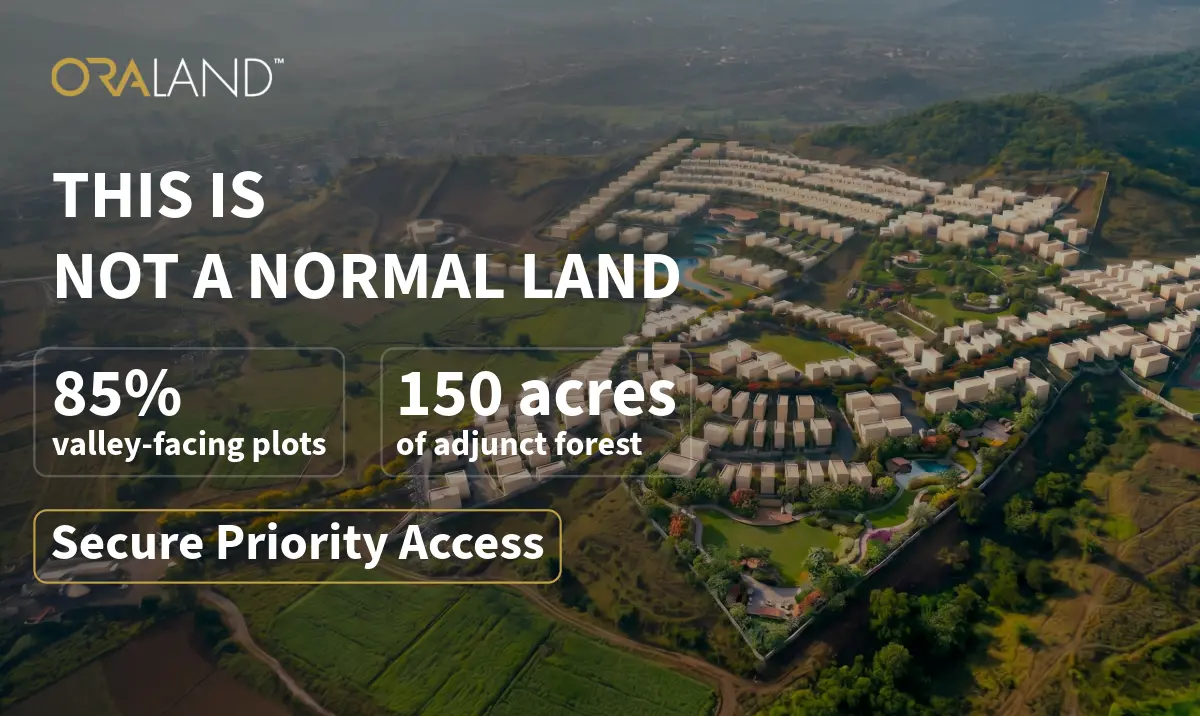
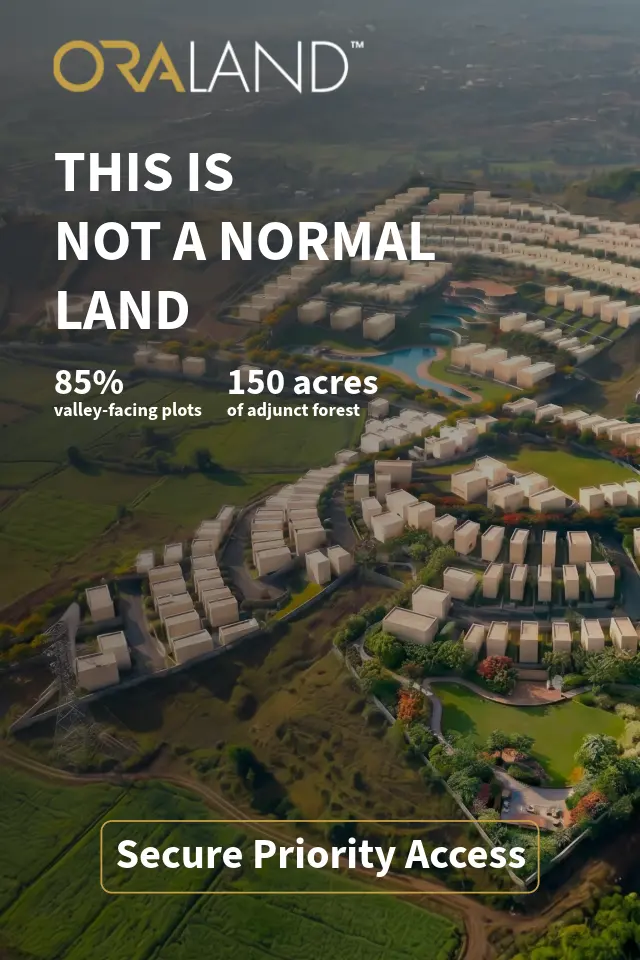
ORA Land T60 is a 60-acre gated hillside NA plotted development in Karjat’s Sahyadri foothills – the largest organised plotted community in the belt. The project sits within the MMRDA’s newly defined 28-village Karjat planning jurisdiction. Plot types and prices:
| Plot Type | Size | Starting Price |
| Boutique | From 1,500 sq ft | On request |
| Premium | ~2,500 sq ft | From ₹1.10 Crore |
| Luxury Estate | 6,000+ sq ft | On request |
Clear NA title, RERA registration in progress, contoured hillside layout, gated security, and internal road infrastructure from day one. This is the legal and structural clarity that open-market Karjat land consistently lacks.
Alibaug’s equivalent organised plotted product – clear-title NA plots in a gated hillside community near the coast – starts at ₹10,000+/sq ft in premium zones. It delivers a comparable legal structure at ₹5,750 to ₹6,400/sq ft.
Conclusion
Karjat vs Alibaug real estate is not about which market is stronger. It is about what you are buying, why, and at what price.
Alibaug offers a beach lifestyle, a mature rental market, and appreciation backed by a ₹66,600-crore infrastructure pipeline. But premium coastal properties come with higher entry prices and annual maintenance of ₹4–10 lakh.
Karjat offers hillside living, suburban rail connectivity, lower entry prices, and 12–20%+ CAGR potential in premium zones. ORA Land’s BluBay, a 60-acre premium plotted development, reflects the growing demand for organised communities in Karjat.
For buyers seeking better value, build freedom, lower ongoing costs, and multiple infrastructure triggers converging in 2026, Karjat makes the stronger case.