Karjat vs Lonavala Real Estate: Where to Invest?
Lonavala has been Maharashtra’s most recognised hill station real estate market for over two decades. Property values have compounded steadily; luxury villas now trade at ₹12,000 to ₹18,000 per sq ft, and over 50% of properties in the market fall into the luxury segment above ₹3 Crore.
Karjat, 60 km from Mumbai via Atal Setu, has been the quieter option. Until 2025, it was a farmhouse belt for buyers who could not afford Lonavala or wanted more land for the same money. Three infrastructure triggers changed that calculus: the Panvel-Karjat suburban rail became operational, the Navi Mumbai International Airport opened, and MMRDA was appointed as the Special Planning Authority for 28 revenue villages in Karjat on May 19, 2026.
This is a direct comparison of Karjat vs Lonavala real estate – prices, infrastructure, appreciation, rental yield, and the right buyer for each market.
The Core Difference: Emerging vs Established
Every data point in this comparison flows from one structural fact.
Lonavala is a mature market. It has a 15-plus-year track record of appreciation, an established rental economy, and brand recognition that draws buyers from both Mumbai and Pune simultaneously. The upside has largely been captured by existing owners. What remains is a stable, premium asset class with moderate growth – what analysts now call a “defensive asset rather than a high-growth play.”
Karjat is an emerging market at an inflection point. Three infrastructure triggers arrived simultaneously in 2025-2026. MMRDA planning authority is newly established. The appreciation runway is longer because the entry price is lower, institutional recognition is newer, and the development plan has not yet been published. Early-stage infrastructure markets historically deliver their strongest returns in the 3 to 7 years after connectivity goes live – that window is open in Karjat right now.
Neither market is wrong. They are at different points in the same cycle.
Location and Connectivity
| Factor | Lonavala | Karjat |
| Distance from Mumbai | ~80 to 85 km via Mumbai to Pune Expressway | ~60 to 75 km from Navi Mumbai, depending on the route |
| Distance from Pune | ~65 km | ~95 to 110 km depending on the route |
| Drive time from Mumbai | ~1.5 to 2 hours depending on traffic | ~1 to 2 hours depending on origin and traffic |
| Rail connectivity | Connected to the Mumbai–Pune railway corridor with frequent long-distance and local train services | Connected to the Central Railway suburban network |
| Major rail upgrades | Existing Mumbai to Pune rail corridor | Panvel to Karjat suburban rail corridor (under construction) and Badlapur to Karjat 3rd & 4th lines (under development) |
| Airport access | Pune Airport (~70 km) and Mumbai Airport (~85 to 100 km) | Future Navi Mumbai International Airport via the Panvel corridor |
| Demand base | Strong demand from both Mumbai and Pune buyers | Primarily, Mumbai, Navi Mumbai, and Thane buyers |
| MMRDA planning authority | No | Yes, notified in May 2026 for designated Karjat growth areas |
Lonavala’s structural advantage is dual-city demand. It sits equidistant between India’s financial capital and its fastest-growing tech metro. Karjat’s structural advantage is its closer proximity to Mumbai and direct rail integration with Navi Mumbai – the MMR zone growing fastest in 2026.
Karjat does not draw Pune buyers in meaningful numbers. Lonavala does not have a suburban rail connection to Navi Mumbai. These differences define the buyer pool for each market.
Price Comparison: What the Data Shows
Lonavala Prices (2026)
| Property Type | Price Range |
| Average property price | ₹12,011 to ₹12,583/sq ft |
| Premium villa zones (Khandala, Tungarli) | ₹12,000 to ₹18,000/sq ft |
| Exceptional hilltop estates | Up to ₹25,000/sq ft |
| NA plots (broader market average) | ₹2,600 to ₹2,700/sq ft |
| NA plots (premium, gated) | ₹4,000 to ₹10,000+/sq ft |
| Minimum NA plot entry (2,500 sq ft) | ₹75 lakh+ |
| Villas (built-up, 3 to 4 BHK) | ₹1.51 Crore to ₹8.75 Crore |
| Luxury villas (4,000+ sq ft, gated) | ₹4.59 Crore to ₹20 Crore+ |
| 1 acre hilltop plot, Tungarli | ₹14 Crore |
| Annual appreciation | 8 to 12% (established zones) |
Notable projects: Tata Housing Privé on Old Khandala Road offers 3 and 4 BHK hillside residences from ₹4.5 Crore to ₹8.75 Crore. 4 Seasons Villas at Kune offer 5 BHK luxury villas of approximately 6,200 sq ft.
Karjat Prices (2026)
| Property Type | Indicative Market Range |
| Agricultural land (open market) | ₹1.6 lakh to ₹3.8 lakh per guntha |
| NA land (open market / potential NA) | ₹4.3 lakh to ₹6.5 lakh per guntha |
| Collector-approved NA land | ₹7 lakh to ₹13 lakh per guntha |
| Premium NA plots in gated hillside communities | ₹5,500 to ₹7,500 per sq ft |
| Farmhouses (2–3 BHK) | ₹1.3 crore to ₹3 crore+ |
| Luxury villas with larger land parcels and pools | ₹4.5 crore to ₹8 crore+ |
| Reported appreciation | Approximately 12 to 15% annually in select premium projects and micro-markets |
The pricing gap between Lonavala and Karjat remains significant. Average residential property prices in Lonavala are typically around ₹12,000 to ₹13,000 per sq ft, while premium NA plots in organised gated communities in Karjat generally range from ₹5,500 to ₹7,500 per sq ft. As a result, a budget of around ₹1.10 crore can secure a larger premium plot in Karjat, whereas the same investment in Lonavala is more likely to buy a smaller plot or entry-level property due to the area’s higher and more mature pricing.
Infrastructure: What Is Backing Each Market
Lonavala Infrastructure
Lonavala’s growth has been driven almost entirely by road connectivity – the Mumbai-Pune Expressway (NH-48) and the Old Mumbai-Pune Highway. There are no new major infrastructure projects specifically targeting Lonavala in 2025-2026.
| Infrastructure | Status |
| Mumbai-Pune Expressway | Operational – long established |
| Central Railway line (Mumbai-Pune) | Operational – existing network |
| Pune Airport | ~69 km – existing |
| Mumbai CSIA | ~90 km – existing |
| New major projects | None specifically targeting Lonavala |
The market is mature precisely because the infrastructure was delivered years ago and prices have already priced it in. There is no new trigger equivalent to what Karjat is experiencing in 2025-2026.
Karjat Infrastructure
| Infrastructure | Value | Status |
| Panvel to Karjat Suburban Rail Corridor | ₹2,782 Crore | Under construction |
| Navi Mumbai International Airport (NMIA) | Phase 1 Project | Under development; operations yet to commence |
| Atal Setu (MTHL) | ₹17,843 Crore | Operational (since January 2024) |
| Badlapur–Karjat 3rd & 4th Rail Line | ~₹1,510 Crore | Under construction; target completion around Dec 2026 |
| JNPA–Chowk Greenfield Highway | ₹4,500.62 Crore | Approved by the Union Cabinet (March 2025) |
| Poshir Water Project | ₹6,394.13 Crore | Approved by Maharashtra Cabinet (May 2025) |
| MMRDA as Special Planning Authority | Planning Authority Notification | Notified May 2026 |
Karjat is set to benefit from multiple infrastructure and planning initiatives between 2024 and 2027, including NMIA, the Panvel–Karjat rail corridor, Badlapur to Karjat rail expansion, the JNPA to Chowk Highway, the Poshir Water Project, and MMRDA-led planning oversight. While Lonavala already has mature infrastructure, Karjat remains in an earlier growth phase with several major projects still underway.
As connectivity across the Navi Mumbai to Raigad corridor improves, the region is expected to attract greater residential demand, development activity, and investor interest. Infrastructure-led growth is likely to remain a key driver of Karjat’s long-term market potential.
Appreciation: Runway vs Track Record
This is where the Karjat vs Lonavala real estate argument becomes clearest.
| Metric | Lonavala | Karjat |
| Recent price growth | Generally steady single-digit to low double-digit growth | Strong growth reported in select micro-markets and plotted developments |
| Market maturity | Established second-home market | Emerging growth market |
| Historical track record | Long-established and relatively mature | Shorter track record, with development momentum building |
| Growth drivers | Tourism demand, Mumbai–Pune connectivity, established premium market | NMIA, Panvel to Karjat rail corridor, Badlapur to Karjat rail expansion, JNPA to Chowk Highway, Poshir Water Project, MMRDA planning framework |
| Future development catalysts | Primarily market-led growth | Multiple infrastructure and planning initiatives underway |
| Investment profile | More mature and relatively stable | Higher-growth potential, subject to project execution and market conditions |
One independent analysis describes Lonavala’s current position directly: “for explosive capital growth, the ceiling effect is now visible, making it a defensive asset rather than a high-growth play.”
That is not a criticism of Lonavala. A defensive asset is exactly what some buyers need. But for investors prioritising capital appreciation over the next 5 to 10 years, the math favours Karjat.
Karjat’s MMRDA development plan is not yet published. When it is – with FSI limits, zonal designations, and infrastructure allocations made public – it will trigger a repricing event similar to what NAINA and Ulwe experienced after their master plans were formalised. Buyers who are in before that event capture the plan-announcement premium.
Rental Yield: Established vs Emerging
| Factor | Lonavala | Karjat |
| Rental yield | ~3–5% | ~3–5% (growth potential) |
| Rental market | Established, competitive | Growing, less saturated |
| Villa rental potential | Strong | Growing |
| Peak season | Monsoon, weekends, holidays | Monsoon, weekends, holidays |
| Demand base | Mumbai + Pune | Mumbai, Navi Mumbai, Thane |
| Growth drivers | Tourism, second homes | Connectivity, infrastructure, tourism |
Lonavala’s rental market is more developed and generates higher absolute income today. A well-positioned Lonavala villa earns approximately ₹15 to ₹50 lakh annually. Karjat’s rental market is growing but has not yet reached this density.
However, Karjat’s lower competition creates a different opportunity. In Lonavala, hundreds of similar villas compete for the same weekend booking. In Karjat, a well-designed hillside farmhouse with a valley view and a pool is still a standout listing. Less competition at lower occupancy rates can still produce competitive yields – and as NMIA brings corporate and leisure traffic into the Navi Mumbai-Karjat corridor, the demand base will expand.
Maintenance: A Shared Hill Challenge
Both markets are hill environments with high monsoon rainfall. The maintenance profile is more similar than the Alibaug comparison but there are differences.
Lonavala Maintenance
Lonavala sits on the Western Ghats ridge between Mumbai and Pune and receives among the highest rainfall concentrations in the subcontinent during monsoon. Property maintenance requirements include:
- Heavy monsoon waterproofing – roofs, terraces, and exterior walls require annual inspection
- Mould and damp control – high humidity from June to September accelerates interior degradation
- Structural integrity checks after intense rainfall seasons
- Landscaping and slope drainage on hillside properties
Annual maintenance for a 3,500 to 5,000 sq ft Lonavala villa typically runs ₹3 lakh to ₹8 lakh per year, comparable to Karjat at similar property sizes.
Karjat Maintenance
Karjat’s Sahyadri foothills climate is slightly less extreme than Lonavala’s ridge position in terms of rainfall intensity, though monsoon is still heavy. The absence of salt air (unlike Alibaug) means structural materials last longer. Hillside plot maintenance includes slope drainage management and retaining wall upkeep on contoured properties.
The maintenance burden is broadly similar across both markets. Neither has a significant cost advantage over the other.
Area-by-Area Breakdown
Lonavala: Where to Buy
| Area | Character | Indicative Price Range |
| Khandala | Luxury villas, heritage properties, premium hill views | ₹15,000 to ₹25,000+ per sq ft |
| Tungarli | Premium villa zone with strong second-home demand | ₹12,000 to ₹18,000+ per sq ft |
| Kune | Gated villa communities and luxury developments | ₹4 crore to ₹9 crore+ per villa |
| Old Khandala Road | Established residential and second-home location | ₹8,000 to ₹14,000 per sq ft |
| Malavli | Relatively affordable entry point near Lonavala | ₹4,000 to ₹7,000 per sq ft |
Karjat: Where to Buy
| Area | Character | Indicative Price Range |
| Gated hillside communities (Sahyadri foothills) | Organised NA plotted developments with infrastructure and amenities | ₹5,500 to ₹7,500 per sq ft |
| Tata Road belt | Farmhouses and larger land parcels in a premium residential belt | ₹3 crore to ₹5 crore+ |
| Kadav belt | Farmhouses and second-home developments | ₹1.3 crore to ₹3 crore+ |
| Bhivpuri | Railway connectivity and growing residential demand | ₹7 to ₹10 lakh per guntha |
| Open-market NA land (highway-access locations) | Flexible pricing; legal due diligence essential | ₹4 to ₹7 lakh per guntha |
Who Should Choose Which Market
| Buyer Goal | Right Market |
| Rental income from day one | Lonavala – established, higher yield |
| Capital appreciation, 5 to 10 year horizon | Karjat – longer runway, infrastructure triggers live |
| Prestige address, Pune + Mumbai demand | Lonavala – dual-city brand |
| Build a custom farmhouse on a plot | Karjat – more NA plot supply at lower entry |
| Budget under ₹1.50 Crore for land | Karjat – NA plots available from ₹1.10 Crore |
| Budget ₹3 Crore+ for built villa | Both viable; Lonavala for prestige, Karjat for upside |
| Rail connectivity from Navi Mumbai | Karjat – under 30 min by Panvel-Karjat suburban |
| Proven stable market, lower risk | Lonavala – 15+ year track record |
| First infrastructure-backed appreciation wave | Karjat – MMRDA plan not yet published |
The ORA Land T60 Option in Karjat
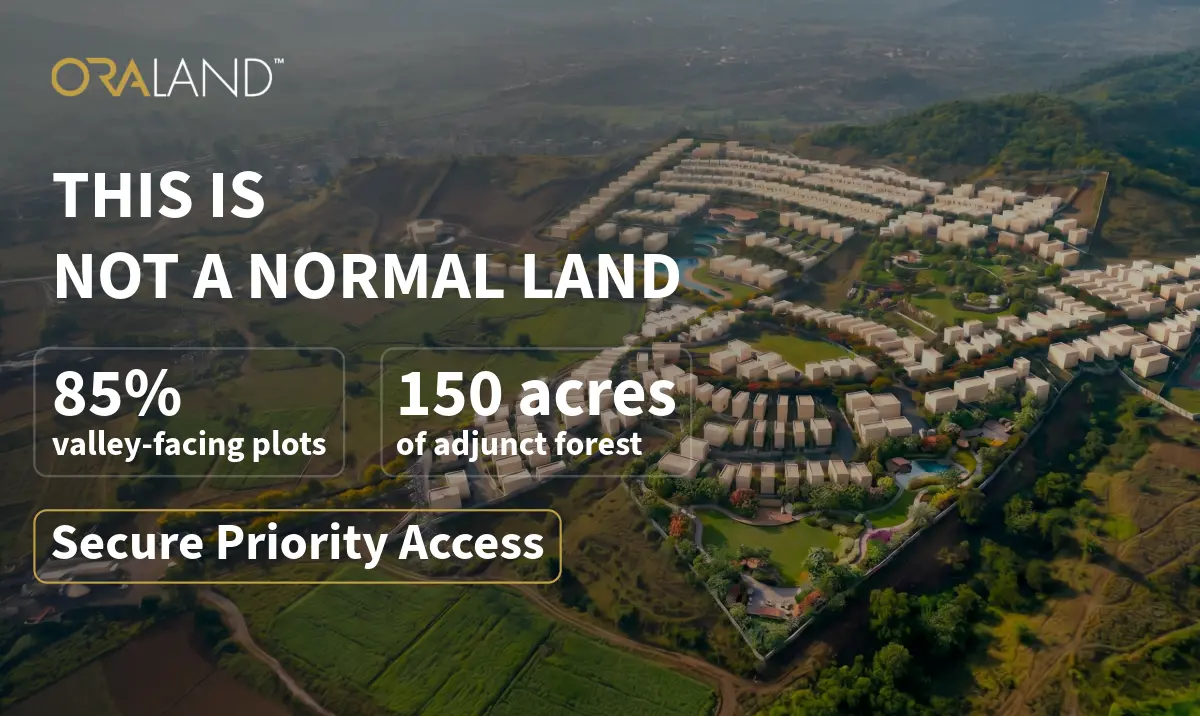
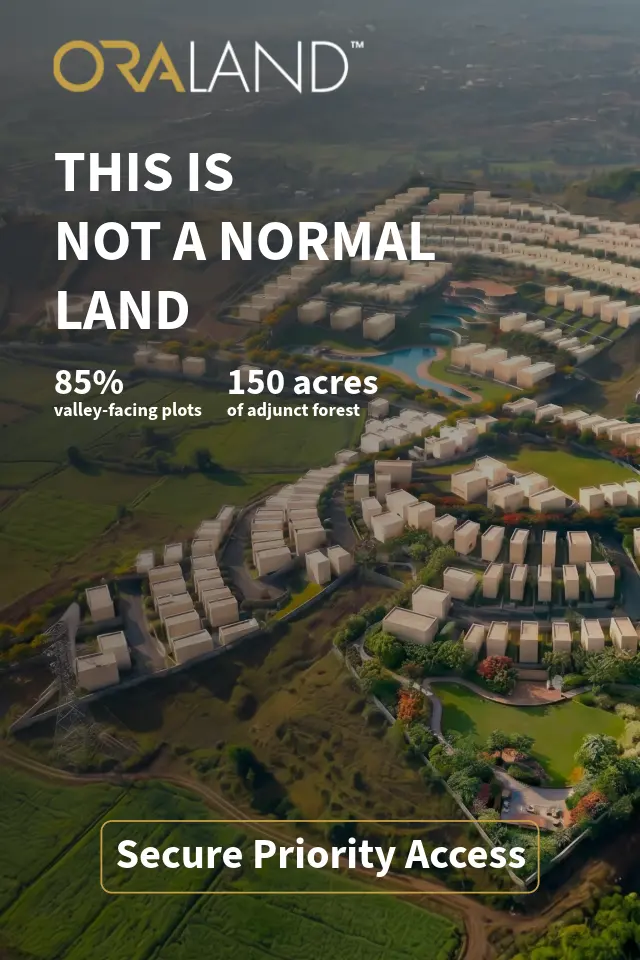
For buyers who have weighed this comparison and concluded Karjat fits their profile – particularly those who want to build their own farmhouse or villa on a legally clear NA plot with infrastructure certainty – ORA Land T60 is the organised entry point.
ORA Land T60 is a 60-acre gated hillside NA plotted development in Karjat’s Sahyadri foothills, within the MMRDA’s newly defined 28-village planning jurisdiction. It is the largest organised plotted community in this belt, offering:
| Plot Type | Size | Starting Price |
| Boutique | From 1,500 sq ft | On request |
| Premium | ~2,500 sq ft | From ₹1.10 Crore |
| Luxury Estate | 6,000+ sq ft | On request |
Clear NA title, RERA registration in progress, contoured hillside layout, gated perimeter, and internal road infrastructure from day one. This is the legal structure that open-market Karjat plots consistently lack.
A comparable legally structured, gated, hillside NA plot in Lonavala starts at ₹75 lakh for a basic 2,500 sq ft entry-level site in a non-premium zone – but in a market where the appreciation runway is considerably shorter and the per-sq-ft entry is roughly double for anything with a genuine view or gated infrastructure.
Conclusion
Karjat vs Lonavala real estate is a question of where you are on the investment timeline.
Lonavala offers proven demand from Mumbai and Pune, an established rental market, and strong brand recognition. It is a mature, lower-risk wealth-preservation play.
Karjat offers lower entry prices, live infrastructure triggers, a new MMRDA planning authority, and a 12–20%+ appreciation runway in premium zones. ORA Land’s BluBay, a 60-acre premium plotted development, reflects the growing shift toward organised, branded communities in Karjat.
The infrastructure is live, the institutional framework is in place, and the development plan is coming. Buyers entering before it is published may be positioned ahead of the market fully pricing in Karjat’s potential.