Discover Wellness Living in Karjat Near Mumbai
Mumbai’s annual average AQI in 2026 is 113 – categorised as Moderate and worsening year after year. In January and February 2026, AQI levels frequently touched 170 to 200, placing many days in the Unhealthy category. Only 8% of the first 177 days of 2026 fell within WHO-safe air quality limits.
Sixty kilometres away by road, in the Sahyadri foothills of Raigad District, Karjat’s AQI consistently hovers between 50 and 60, rated Good by environmental monitoring agencies and a rarity within commuting distance of any Indian metro. Communities such as BluBay by ORA Land allow buyers to experience this cleaner, nature-focused environment without giving up easy access to Mumbai.
Wellness living in Karjat is not a weekend concept. It is a permanent environment – clean air, dense forest, moving water, cool terrain, and silence – that restores what city life systematically takes away.
Sources: Mumbai AQI data – Mumbai Historical Air Quality Analysis, AQI.IN | Mumbai 2026 AQI comparison – Mumbai Air Quality 2025 vs 2026, AQI.IN Blog (February 2026) | Karjat AQI – Where Nature Breathes: Chowk-Karjat’s AQI and Biodiversity, The Tribune (September 2025)
The Air You Breathe: Mumbai vs Karjat
The gap between Mumbai’s air and Karjat’s air is not a matter of degree. It is a clinical difference with measurable health consequences, one of the reasons ORA Land has chosen Karjat for its nature-focused plotted developments.
| Metric | Mumbai (2026) | Karjat |
| Annual average AQI | 113 (Moderate) | 50 to 60 (Good) |
| Days within WHO safe limits | 8% of 177 days | Consistently within range |
| Winter peak AQI (Jan-Feb 2026) | 170 to 200 (Unhealthy) | 50 to 65 |
| PM2.5 annual average | 36.1 μg/m³ | Significantly lower |
| Primary pollutants | Vehicular, industrial, port | Minimal anthropogenic sources |
Clean air at AQI 50 to 60 is not merely comfortable. Research confirms specific health outcomes: improved respiratory function, reduced cardiovascular risk, better sleep quality, and measurably enhanced mental clarity and focus. For families with children, elderly members, or anyone managing lifestyle-related health conditions, Karjat’s air quality is not a perk. It is a health decision.
Sources: Mumbai PM2.5 data – Mumbai Air Pollution, Deccan Herald / Respirer Living Sciences | Health effects of clean air – Where Nature Breathes, The Tribune (September 2025)
The Science of Nature Immersion
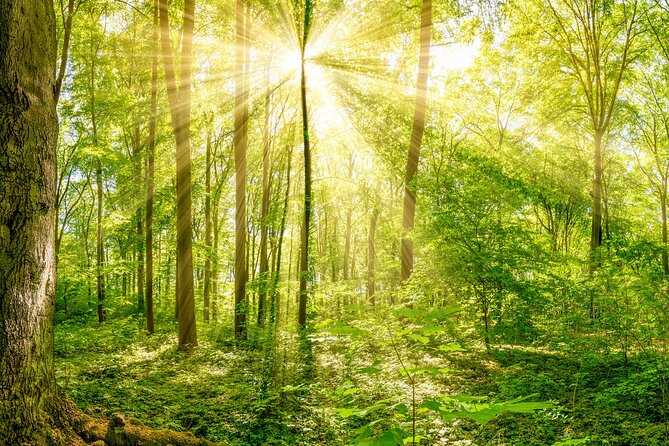
Karjat sits at the foothills of the Sahyadri range – a UNESCO-recognized biodiversity hotspot. The region is home to endemic plant species, year-round streams, evergreen forest corridors, and a climate that runs 3 to 5 degrees cooler than Mumbai throughout the year.
The Japanese practice of Shinrin-yoku – forest bathing – has generated substantial clinical literature. Exposure to forested environments reduces cortisol (the primary stress hormone), improves NK cell activity (immune function), lowers blood pressure, and enhances emotional resilience. Dr. Qing Li, author of Forest Bathing: How Trees Can Help You Find Health and Happiness, states directly: “Nature immersion isn’t a trend – it’s a biological necessity. Our nervous systems are wired to respond positively to biodiversity.”
Studies on blue space – proximity to natural water bodies – show parallel benefits. Individuals living near water report lower stress markers, better mood regulation, and improved recovery from mental fatigue than those without access to natural water environments.
The Forest: Miyawaki and Beyond
A Miyawaki planting is not a standard park or landscaped garden. Developed by Japanese botanist Akira Miyawaki, the method plants native species at 10 times the density of conventional forestry. The result: a forest that establishes in 10 years what conventional planting takes 100 years to achieve. At full establishment, a Miyawaki forest produces significantly higher phytoncide concentrations than conventional green cover. Phytoncides are airborne compounds released by trees that research links to enhanced NK cell activity and reduced blood cortisol levels.
The 4.2-acre Miyawaki forest is a permanent green asset within the gated community – dense, native-species, and independent of what happens outside the community boundary. The 150 acres of natural forest reserve adjacent to BluBay reinforce this with old-growth biodiversity that no planted forest can replicate.
Together, these two green layers create a community where the forest is not the setting. It is the infrastructure.
The Lagoon: Blue Space in the Sahyadri Hills
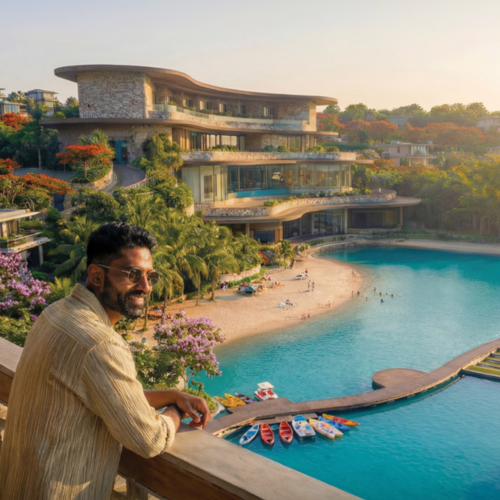
The science of blue space wellness is well-documented. Proximity to water reduces psychological stress, improves attention restoration, and supports emotional regulation. A natural or curated water body within a living environment delivers these benefits continuously – not as a one-time intervention but as a permanent feature of daily life.
For residents, the lagoon functions across all dimensions of wellness simultaneously. Visually, it anchors the community’s orientation and provides the calming blue-horizon effect that coastal living delivers. Physically, it enables swimming, aqua yoga, and paddleboarding. Socially, it creates the informal gathering spaces – the beach edge, the sun loungers, the waterside deck – that wellness communities require.
No other plotted development in Karjat offers a lagoon. The feature is unique to BluBay and is the most direct expression of blue space wellness living near Mumbai available in the region.
The Climate and Terrain
Karjat’s Sahyadri foothills setting creates a micro-climate that is measurably different from both coastal and plateau destinations near Mumbai.
- Temperature: 3 to 5 degrees cooler than Mumbai year-round. In peak summer (April to June), this difference reaches 6 to 8 degrees – making the hill environment liveable without heavy air conditioning dependence.
- Humidity: Managed by elevation and forest cover. Unlike Alibaug’s high coastal humidity or Lonavala’s extreme monsoon moisture, Karjat’s hillside position provides natural humidity modulation through most of the year.
- Monsoon: The Sahyadri foothills receive sustained monsoon rainfall that sustains streams, waterfalls, and greenery through October. Rather than a limitation, the monsoon is Karjat’s peak wellness season – cooler temperatures, flowing streams, lush forest, and significantly cleaner air.
- Silence: An asset that urban living has rendered rare. Karjat’s low residential density – particularly in the hillside gated community belt – means that the auditory environment is defined by birdsong, water, and wind rather than traffic and construction.
Karjat’s Growing Wellness Ecosystem
Wellness living in Karjat is supported by an ecosystem of hospitality, dining, and leisure infrastructure that has grown significantly in the last three years.
- Hospitality: Radisson Blu Plaza Resort and Convention Centre, The Forest Club Resort, U Rivergate Karjat, and Oleander Farms anchor the region’s premium hospitality. These properties bring professional wellness programming – spa treatments, guided nature walks, yoga retreats, and curated river experiences – that the local ecosystem now supports year-round.
- Dining: Saltt Restaurant and Bar, Common House, and Saffron offer gourmet and artisanal dining that rivals established hill station destinations. The presence of curated food and beverage infrastructure signals that Karjat has moved beyond its weekend retreat status into a genuine lifestyle destination.
- Adventure and outdoor: The Ulhas River, Kondana Caves, Matheran proximity, Prabal Fort, and multiple certified trekking trails connect residents to the Sahyadris’ outdoor infrastructure without requiring travel beyond the immediate region.
For buyers seeking clean land options to build custom retreats in this growing ecosystem, exploring dedicated land for sale near Mumbai offers a direct path into the region
BluBay Karjat: Wellness Living, Structured
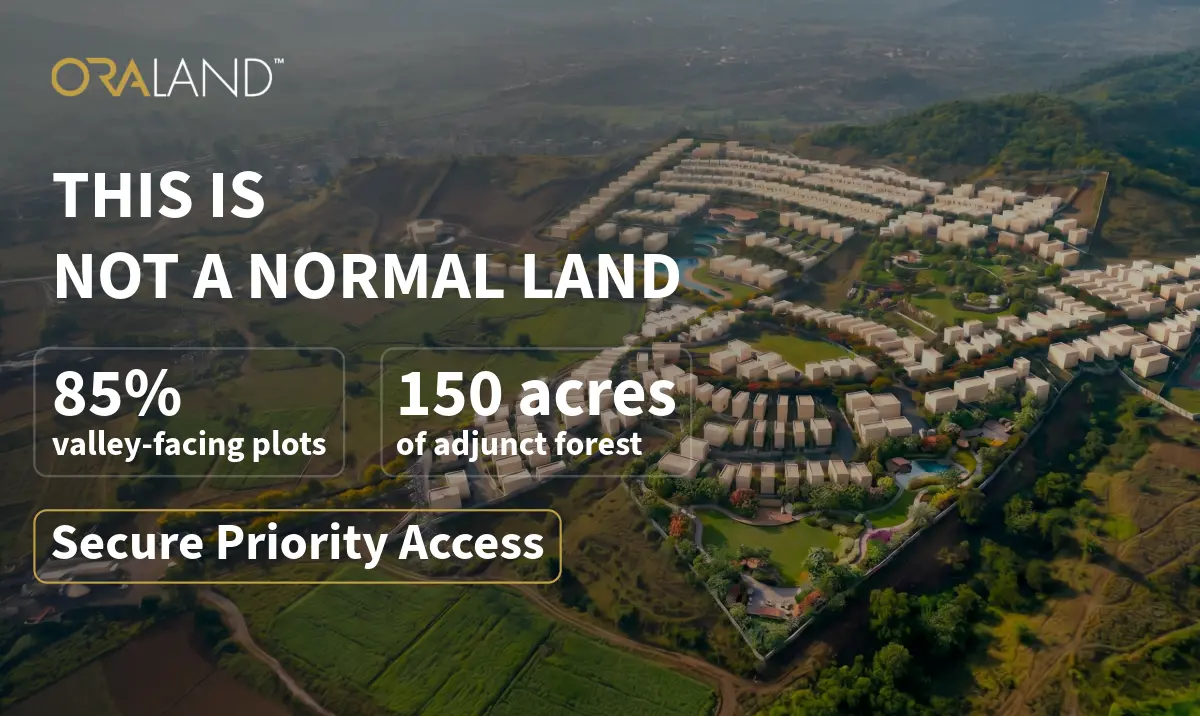
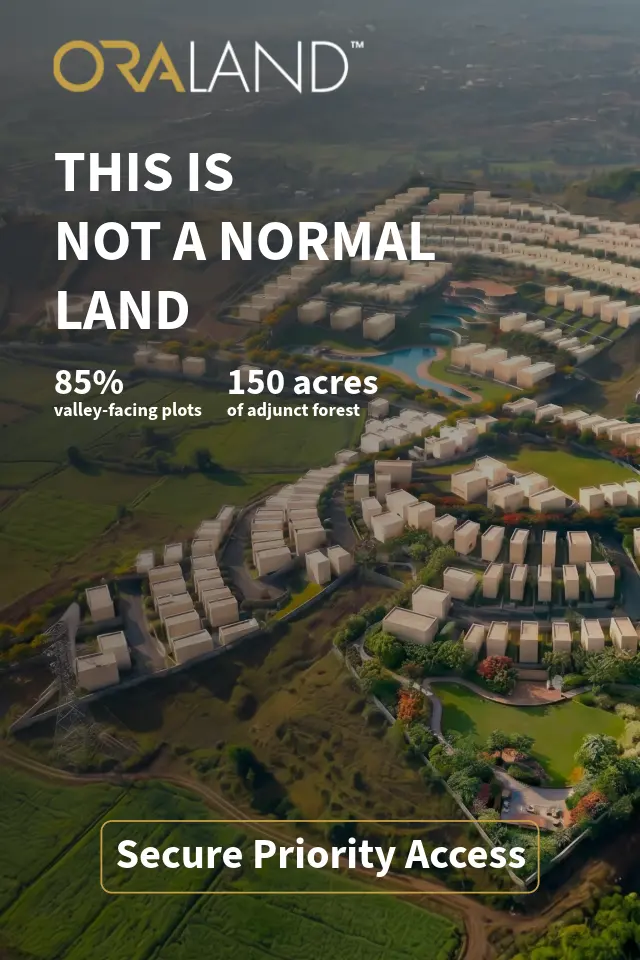
ORA Land BluBay brings every element of Karjat’s wellness environment into a single, organised residential community. It is a 60-acre gated hillside plotted villa community in Halivali – 3 minutes from Karjat Railway Station, 60 km from Mumbai via Atal Setu, and under 30 minutes from Navi Mumbai by the Panvel-Karjat suburban rail. If you are evaluating BluBay as a second home, read Build a Second Home in Karjat: BluBay by ORA Land. For the investment case, see Why BluBay Is the Best Investment in Karjat. If you want to build a villa on your plot, read our Build a Gated Community Villa Near Mumbai guide.
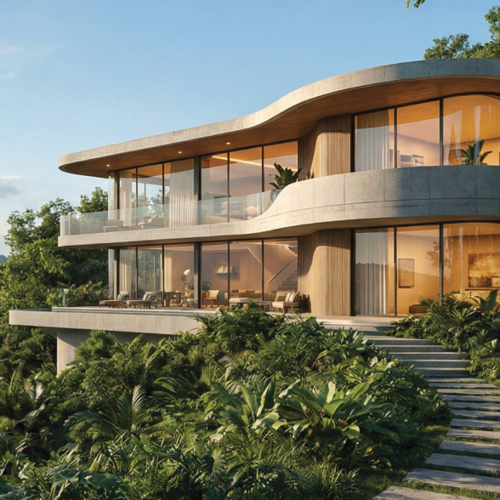
If you are exploring structured layouts, browse our available villa plots in Karjat to see how wellness infrastructure is integrated into individual plot designs.
The wellness infrastructure within BluBay includes:
Forest and green:
- 4.2-acre Miyawaki forest – dense native-species, high phytoncide output
- 150 acres of adjacent natural forest reserve
- Butterfly garden, organic herb garden, nature trails, bird watching zones
Water:
- 1.5-acre crystal lagoon (Fluidra design) – aqua yoga, kayaking, paddleboarding, beach edge
- Infinity swimming pool with valley orientation
Movement and body:
- Full-service spa with steam and sauna
- Dedicated yoga studio (indoor) and outdoor yoga lawn
- Fully equipped gymnasium
- Sports courts – tennis, badminton, squash, basketball, volleyball, pickleball
Mind and restoration:
- Meditation hall
- Stargazing deck – elevated, low light pollution
- Sunrise deck – east-facing, Sahyadri valley view
- Library and reading room
Community and nourishment:
- Fine dining restaurant and rooftop lounge
- Organic herb garden (community-grown produce)
- Co-working and business lounge for hybrid-work residents
This is not a checklist of amenities. It is a daily wellness environment – where the air, the water, the forest, the silence, and the designed spaces all work together to produce a quality of life that no Mumbai apartment, however well-appointed, can replicate.
Plot tiers at ORA Land BluBay:
| Plot Type | Size | Starting Price |
| Boutique | From 1,500 sq ft | On request |
| Premium | ~2,500 sq ft | From ₹1.10 Crore |
| Luxury Estate | 6,000+ sq ft | On request |
Every plot carries a clear NA title and RERA registration in progress. Suryakumar Yadav, captain of the Indian cricket team, is ORA Land’s brand ambassador.
Conclusion
Wellness living in Karjat is backed by data that most lifestyle decisions are not. An AQI of 50 to 60 versus Mumbai’s 113. A UNESCO-recognised biodiversity hotspot within commuting distance. A Miyawaki forest, a crystal lagoon, and Sahyadri terrain that science confirms as restorative environments – not by marketing convention but by clinical research.
ORA Land translates this environment into a structured, legally clear residential community. A place where wellness is not a weekend retreat. It is where you live.