Plots in Mumbai 3.0: Is it a Good Time to Invest?
Mumbai 3.0 is no longer a marketing phrase. In October 2024, the Maharashtra government formally notified the Karnala-Sai-Chirner (KSC) New Town – a 323.44 sq km planned region covering 124 villages across Uran, Panvel, and Pen talukas. MMRDA was appointed as the New Town Development Authority. A Government Resolution on land acquisition was issued on March 17, 2026. The master plan targets completion by August 2026.
This is planned, government-backed urban expansion – not speculation.
The question is not whether Mumbai 3.0 is real. It is whether 2026 is still an early enough entry point for plots in Mumbai 3.0 to generate meaningful returns.
What does Mumbai 3.0 cover?
The term Mumbai 3.0 is used in two ways. The first is the formal definition.
- Mumbai 3.0 (formal): The KSC New Town – 124 villages across Uran, Panvel, and Pen. This is the officially planned third city of the Mumbai Metropolitan Region, designed to absorb demand that Mumbai and Navi Mumbai can no longer accommodate.
- Mumbai 3.0 (broader corridor): The extended MMR growth belt that runs from Panvel and Ulwe through Khopoli, Karjat, and Alibaug – all connected by the Atal Setu, the Panvel-Karjat rail, and the NMIA. Real estate developers and investors use this framing to describe the entire southward expansion of MMR.
| Zone | Role in Mumbai 3.0 |
| Uran and Dronagiri | Port-led growth and logistics hub |
| Chirner and Sai | Core of KSC New Town master plan |
| Panvel and Ulwe | Airport corridor – residential and commercial |
| Pen | Industrial and logistics corridor |
| Khopoli | Budget residential and manufacturing |
| Karjat | Nature-integrated living – extended growth corridor |
| Alibaug | Coastal luxury – western edge |
Karjat sits at the eastern end of the extended Mumbai 3.0 corridor. It is the nature-integrated, hillside counterpart to Panvel’s urban density.
The Infrastructure That Makes This Real
Every real estate cycle has a trigger. Mumbai 3.0’s trigger is not one project – it is four converging simultaneously in 2025-2026.
- Navi Mumbai International Airport (NMIA): Domestic operations launched December 25, 2025. International flights started in May 2026 with 35 daily international departures. The airport handles 20 million passengers annually in Phase 1. This is the primary economic engine for the entire corridor.
- Atal Setu (MTHL): Operational since 2024. Cuts South Mumbai to Navi Mumbai to under 20 minutes. Puts Panvel, Karjat, and Alibaug within a genuine daily commute range for South Mumbai’s workforce.
- Panvel-Karjat Suburban Rail: Operational since 2025. Connects Navi Mumbai to Karjat in under 30 minutes – effectively pulling Karjat into Mumbai’s suburban rail network for the first time.
- MMRDA’s ₹48,072 Crore Infrastructure Outlay: The MMRDA 2026-27 budget is the first surplus budget in nine years, with 87% allocated to infrastructure works. ₹4,000 Crore is earmarked specifically for KSC New Town development.
Beyond government spending, Blackstone Group announced plans in January 2025 to invest up to $11 billion in Maharashtra over 3 to 5 years, with $5 billion earmarked specifically for Third Mumbai. This is institutional capital confirming the thesis.
Plot Prices Across the Mumbai 3.0 Corridor
Current prices vary sharply by zone. Buyers closer to the airport and the formal KSC New Town pay more. Buyers in the extended corridor – including Karjat – get the same infrastructure upside at lower entry prices.
| Zone | Current Plot Price Range | YoY Appreciation |
| Ulwe | ₹8,000to₹15,000/sq ft (apartments) | +12 to 16% since NMIA clearance |
| Panvel | ₹8,000 to ₹18,000/sq ft | +28.94% YoY (Q1 2026) |
| Uran and Pen | ₹1,500 to ₹6,000/sq ft | Active development phase |
| Khopoli | ₹2,000 to ₹5,000/sq ft | Affordable corridor |
| Karjat (open market NA) | ₹3,000 to ₹8,500/sq ft | 12 to 20%+ in premium zones |
| Karjat (gated NA project) | ₹5,500 to ₹7,500/sq ft | Strong demand |
For context, developed Mumbai averages above ₹50,000/sq ft. Plots in Mumbai 3.0 are priced at a 70 to 90% discount to the city core – while being connected to it by live infrastructure.
Is 2026 Still Early Enough?
This is the real question. And the answer is yes – but with a narrowing window.
Here is why 2026 is still an entry opportunity.
- The master plan is not done. The KSC New Town master plan targets August 2026 completion. Buyers entering before the master plan is public are buying before the market prices are fully visible. Historical data across Indian infrastructure corridors show 20 to 30% price jumps post-master plan announcement. The buyers who entered in 2024 and early 2025 are already holding appreciation. Those who enter in 2026 are still ahead of the master plan visibility event.
- NMIA just opened. The airport became operational in December 2025. Panvel recorded 28.94% YoY appreciation in Q1 2026 – the immediate post-opening surge. The surrounding corridor, including Karjat, has not yet fully priced in the airport’s long-term demand effect. The first wave of institutional tenants and businesses setting up near NMIA typically arrives 12 to 24 months after airport opening – that demand has not yet reached the market.
- CIDCO tenders are live. CIDCO finalized ₹6,000+ Crore in infrastructure tenders in 2026 – the first time in twelve years. This covers roads, drainage, electricity, and water across NAINA villages. Tender awards precede on-ground work by 12 to 18 months. Buyers entering now are buying before the visual evidence of development.
- Planned institutions are being signed. In June 2025, Maharashtra’s Chief Minister and Union Education Minister handed Letters of Intent to five international universities for campus development in Mumbai 3.0. These include the University of York and the University of Western Australia. Once campuses open, rental demand from students and faculty creates a permanent income layer for nearby residential plots.
The Risks to Know Before Buying
Mumbai 3.0 investment is not risk-free. Buyers who ignore these points end up holding illiquid or legally complicated assets.
- Master plan delays can shift timelines. The August 2026 master plan target may slip. Government planning processes in India frequently run beyond initial deadlines. Buyers should plan for a 7 to 10 year hold horizon, not a 3 year flip.
- Not all land is clean. Some villages in Uran and Pen have raised concerns about agricultural land conversion. Protest committees have formed in specific pockets. The fix is straightforward: only buy plots with a clear NA order already issued, verified via the Maharashtra Land Revenue Records (Mahabhulekh) portal.
- Panvel is already mature. Buyers looking at Panvel and Ulwe at current prices of ₹8,000 to ₹18,000/sq ft are entering after the first major appreciation wave. The upside-to-entry ratio is lower here than in extended corridor zones.
- Avoid unregistered projects. RERA registration is non-negotiable in any organised Mumbai 3.0 plotted development. Verify registration at maharera.mahaonline.gov.in before signing anything.
Mumbai 3.0 Plots vs Mumbai 2.0 Apartments: The Math
This comparison makes the investment case clearer than any narrative.
| Factor | Mumbai 2.0 Apartment (Navi Mumbai) | Mumbai 3.0 Plot (Karjat) |
| Entry price | ₹19,800/sq ft (June 2025 avg) | ₹5,750 to ₹6,400/sq ft |
| Annual appreciation | 5 to 8% | 12 to 20%+ |
| Design freedom | Zero | Complete |
| Maintenance cost | Society charges + lift + sinking fund | Minimal (land holding) |
| Rental yield (land only) | Not applicable | Capital gain play |
| 10-year projected growth | 50 to 80% (established market) | 3x to 5x (emerging market) |
For every ₹1 Crore deployed in a Mumbai 2.0 apartment, the same capital buys a premium NA plot in a gated Karjat hillside community with three live infrastructure triggers and a 20%+ CAGR in the strongest zones.
Where in Mumbai 3.0 to Buy Plots
Not all zones offer the same risk-return profile in 2026.
- Panvel and Ulwe: Best for buyers who want airport adjacency and near-term rental demand. Higher entry cost. The first appreciation wave has already run its course. Still a solid market for long-term holders.
- Uran and Pen: Cheapest entry in the core KSC zone. Highest risk – land acquisition disputes are more common here. Suited to investors who can tolerate uncertainty and hold for 8 to 10 years.
- Khopoli: Budget residential corridor. Good for affordable entry. Less nature premium than Karjat.
- Karjat: The nature-integrated end of the Mumbai 3.0 corridor. Forested hillsides, clean air, Panvel-Karjat rail access, and 60-minute Mumbai road connectivity via Atal Setu. Premium NA plots in organised gated communities at ₹5,750 to ₹6,400/sq ft. The highest lifestyle value in the corridor at a mid-range price point.
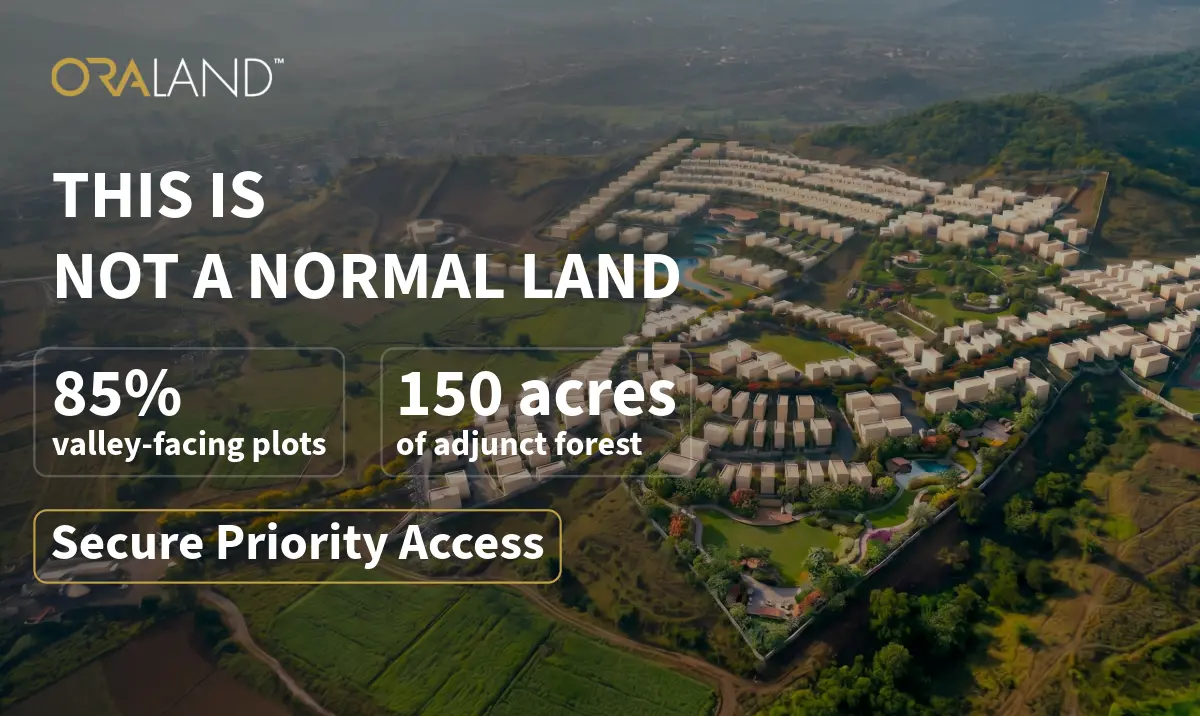
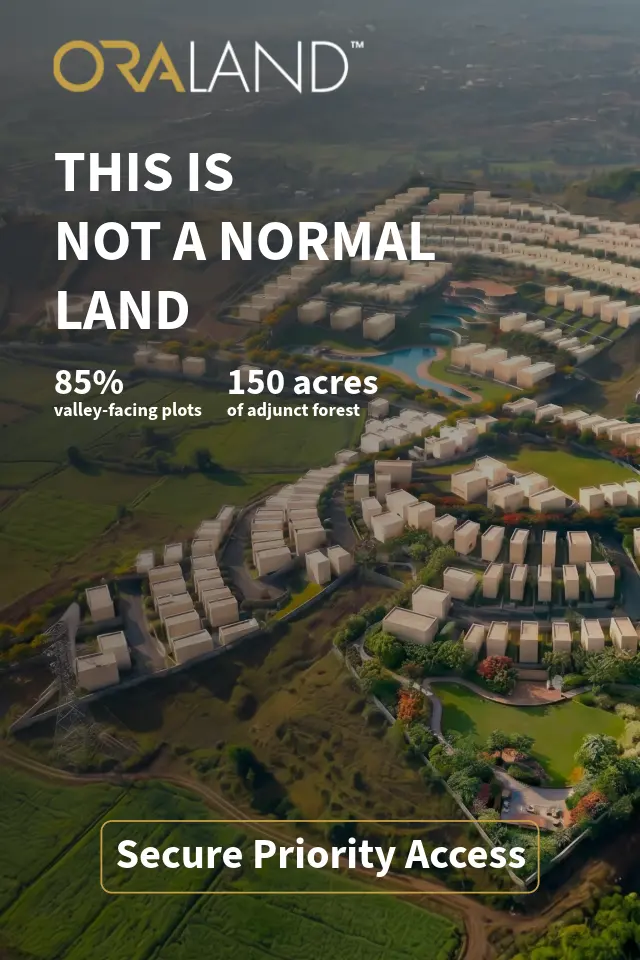
ORA Land T60 is the largest organised gated NA plotted development in the Karjat belt – 60 acres of contoured Sahyadri hillside with clear-title plots and RERA registration in progress. Mumbai 3.0 land for sale at this specification and legal clarity is not commonly available in the open market.
What to Check Before You Buy
Five non-negotiable checks before committing to any Mumbai 3.0 plot investment:
- NA status: Confirm the NA order number and issuing authority. Verify on Mahabhulekh (mahabhulekh.maharashtra.gov.in).
- RERA registration: Check project registration on maharera.mahaonline.gov.in. No RERA number – do not proceed.
- 7/12 extract: Confirm the seller’s name matches the 7/12 land record. Any mismatch is a red flag.
- Encumbrance certificate: Confirm no loans, disputes, or litigation against the plot.
- Legal opinion: Have a local Raigad District advocate conduct an independent title search before signing.
Conclusion
Mumbai 3.0 investment is backed by MMRDA, institutional capital including Blackstone’s $5 billion commitment, and live infrastructure such as NMIA, Atal Setu, and the Panvel-Karjat rail corridor. With the master plan nearing completion, plots remain available at 70–90% below developed Mumbai prices, while leading zones have seen 12–28%+ appreciation.
Is 2026 still the right time? Yes, but the window is narrowing. Panvel has already repriced sharply, while the extended corridor, including Karjat, still offers meaningful upside.
Projects such as ORA Land reflect the growing investment activity in Karjat. Buyers entering Mumbai 3.0 in 2026 are positioned between infrastructure certainty and the next phase of master-plan-led appreciation.